
hard to shop for
A gift for someone who hates generic gifts
Some people are genuinely hard to shop for, and the reason is rarely taste. It is that they notice when a gift could have been given to anyone. Another candle, another gadget, another card with a printed sentiment, all of it reads as a category rather than as them.
The way out is not a rarer object. It is proof that you know them. BloomQuest: Celebrate turns the details you already hold, memories, habits, inside jokes, into a private interactive quest they walk through scene by scene, delivered as one link with no app to install.
Best for: Anyone shopping for a person who says they do not want anything, or who quietly dislikes everything they are given.
Updated
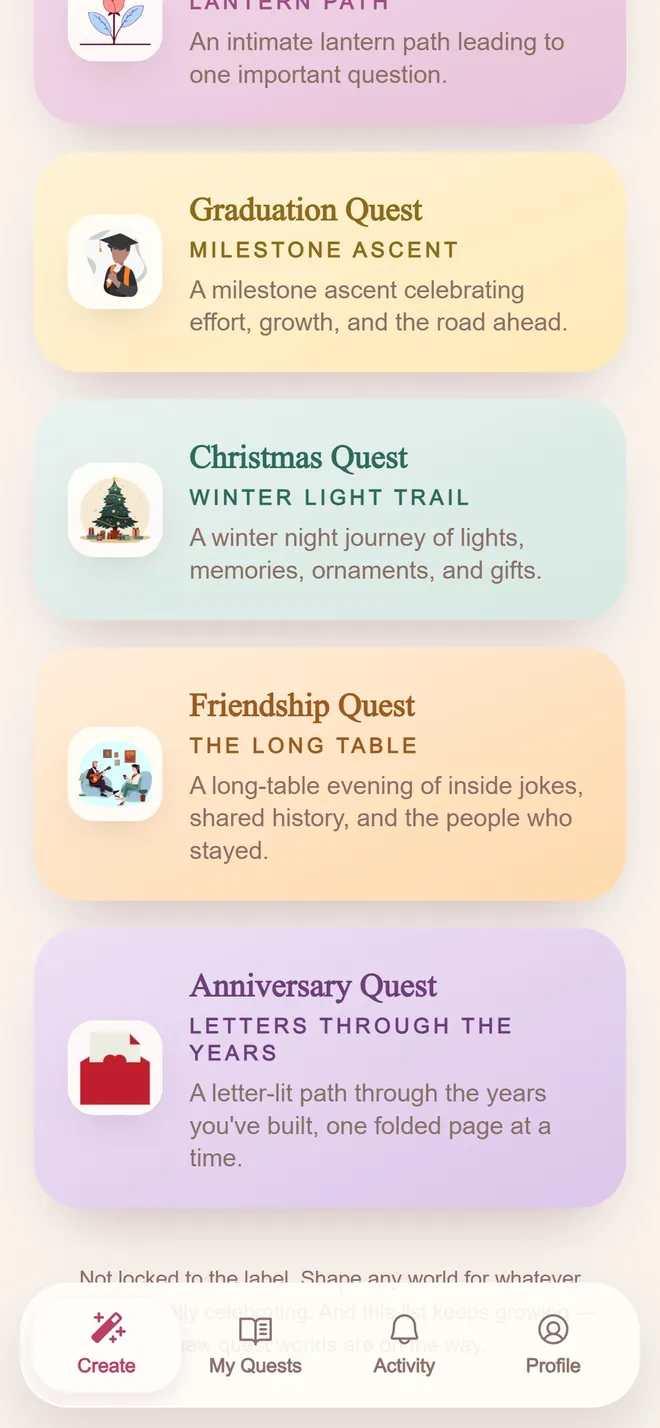

Pick the occasion
step 01 · nine templates
Why this format works
Impossible to send to anyone else
The scenes are built from your specific history, so the gift only makes sense for one person by construction.
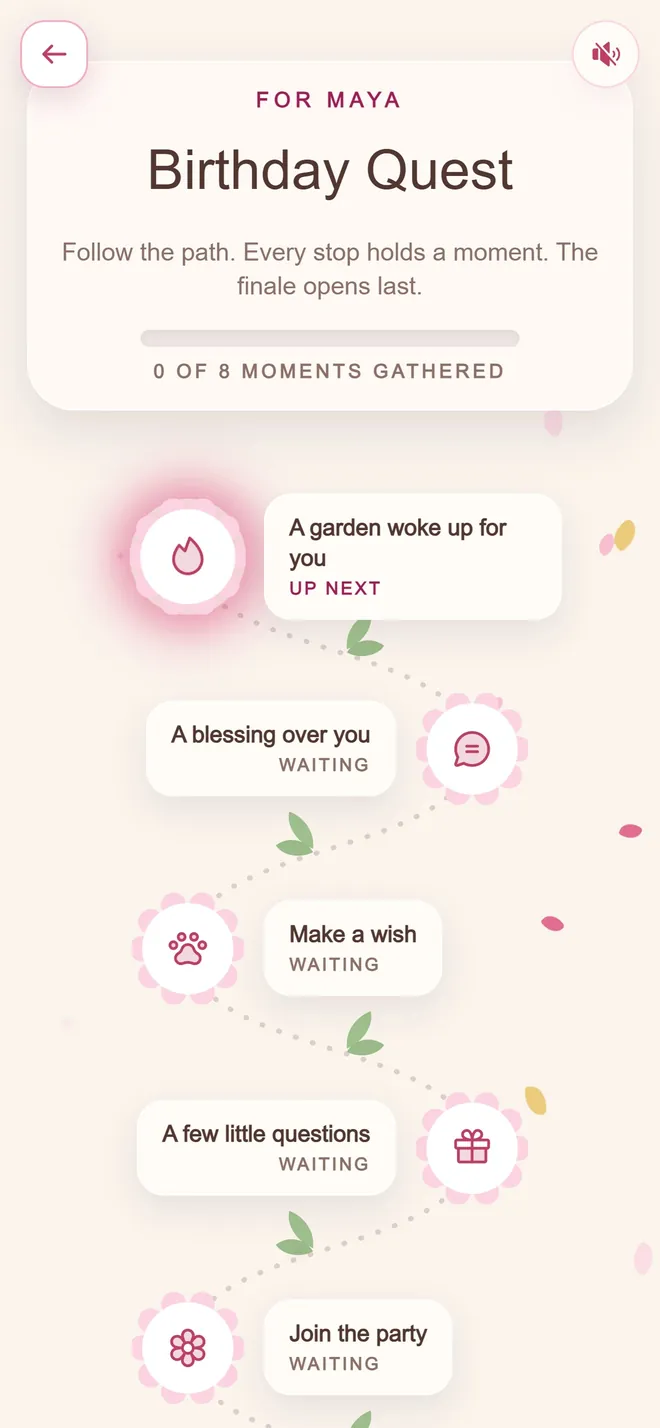
Every stop holds a moment
the path they walk
No object to store
People who dislike generic gifts often dislike clutter for the same reason. A link takes up no space.
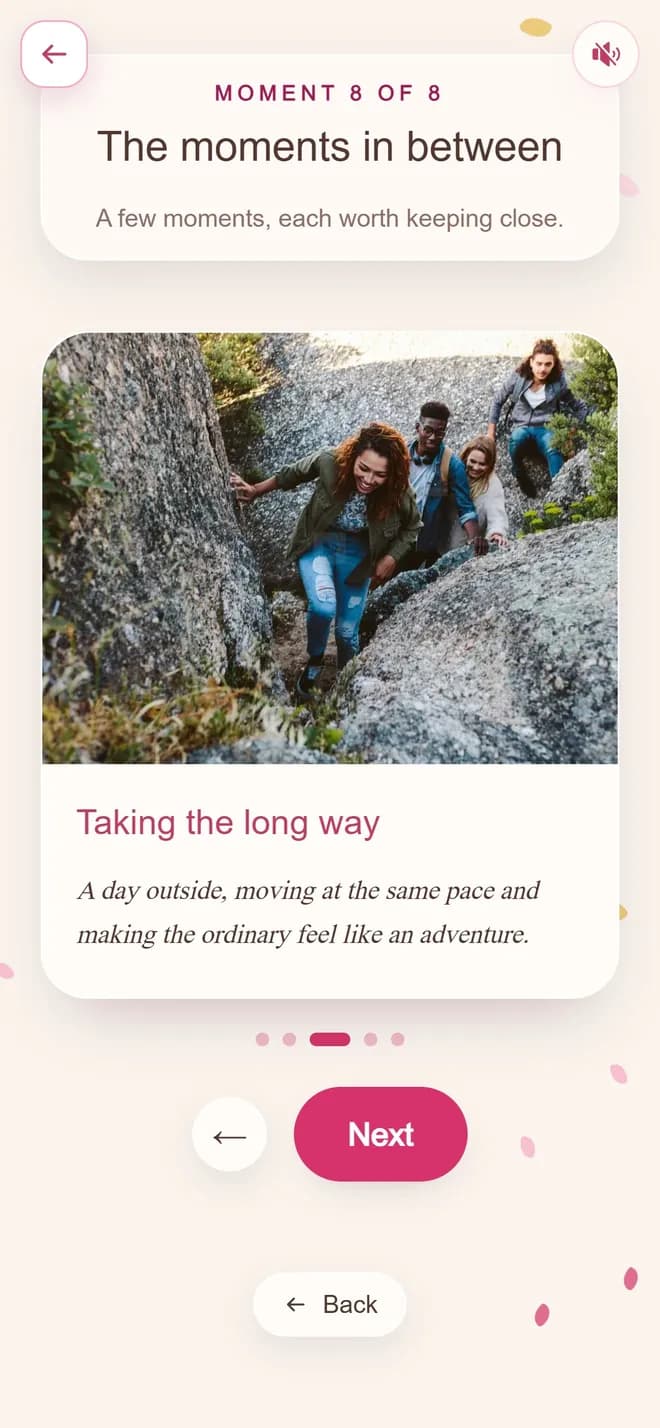
The moments in between
moment 8 of 8 · your photos
You control every word
The first draft comes from your own memories, and you edit until it sounds like you rather than like a template.
It can be reopened
Unlike a card that is read once, a private link stays available months later.
What the objection usually is
People described as difficult to buy for are rarely objecting to gifts. They are objecting to being treated interchangeably, and a generic present is direct evidence of that.
This is why spending more usually fails. An expensive generic gift confirms the complaint rather than answering it.
The reliable approach
Go back through recent conversations for something they mentioned once and moved on from. That reference is the strongest signal available because they will remember saying it and assume nobody registered.
Where you have no such detail, say something true instead of buying something safe. Honest specificity beats a well-chosen object with nothing behind it.
Ways to make it land
- 1
Start from a detail nobody else knows
A phrase they repeat, a habit, a small thing they did once. Build outward from there instead of starting from a product category.
- 2
Reference a moment, not a trait
Saying they are kind is generic. Describing the time they drove two hours for you is not.
- 3
Use the archive you already have
Photos, messages, and shared history are the least generic material available to you, and you already own all of it.
- 4
Give it a shape they move through
The same memories land harder as a paced sequence than as one long message they scroll past.
- 5
Keep the object small or skip it
Pair a specific experience with something practical if you want, but do not let the object carry the meaning.
Examples you can borrow
I know your position on gifts. This is deliberately not one of the ones you object to.
You said this once, in passing, about eight months ago. I wrote it down at the time.
Specific on purpose. You would have hated the alternative.
Mistakes worth avoiding
Chasing novelty instead of specificity
An unusual gift is still generic if it says nothing about the recipient. Strange is not the same as personal.
Spending more to compensate
Price is the least personal variable in any gift. Raising it does not fix the problem.
Hiding behind a card
A thoughtful object with three words written on it puts all the meaning in the part you spent the least time on.
Matching occasion templates
Common questions
What do you get someone who hates generic gifts?
Something built from specifics rather than chosen from a category. A private interactive quest made from real memories cannot be generic, because none of it would make sense for another person.
How do I know if a gift is generic?
Remove the name and ask whether a stranger could tell who it was for. If they could not, add a detail that only the two of you would recognise.
Is a digital gift risky for someone this particular?
The format matters less than the content. What these recipients object to is being treated as interchangeable, and a gift built from their own history is the opposite of that.
Ready to build it?
Free to start. Pay only when you are ready to share.