
Writing to sons
Messages for your son: 157 examples across 13 occasions
Sons frequently report that they were not sure their parents were proud of them, while their parents assumed it was obvious. The gap is almost always a gap in saying it plainly, not in feeling it.
So the useful message to a son is unusually direct. Not a summary of his achievements, which he can already list, but the sentence underneath: I am proud of you, and here is the specific thing.
If the relationship is not verbally expressive, that is an argument for writing it rather than against it. Paper does what conversation has not.
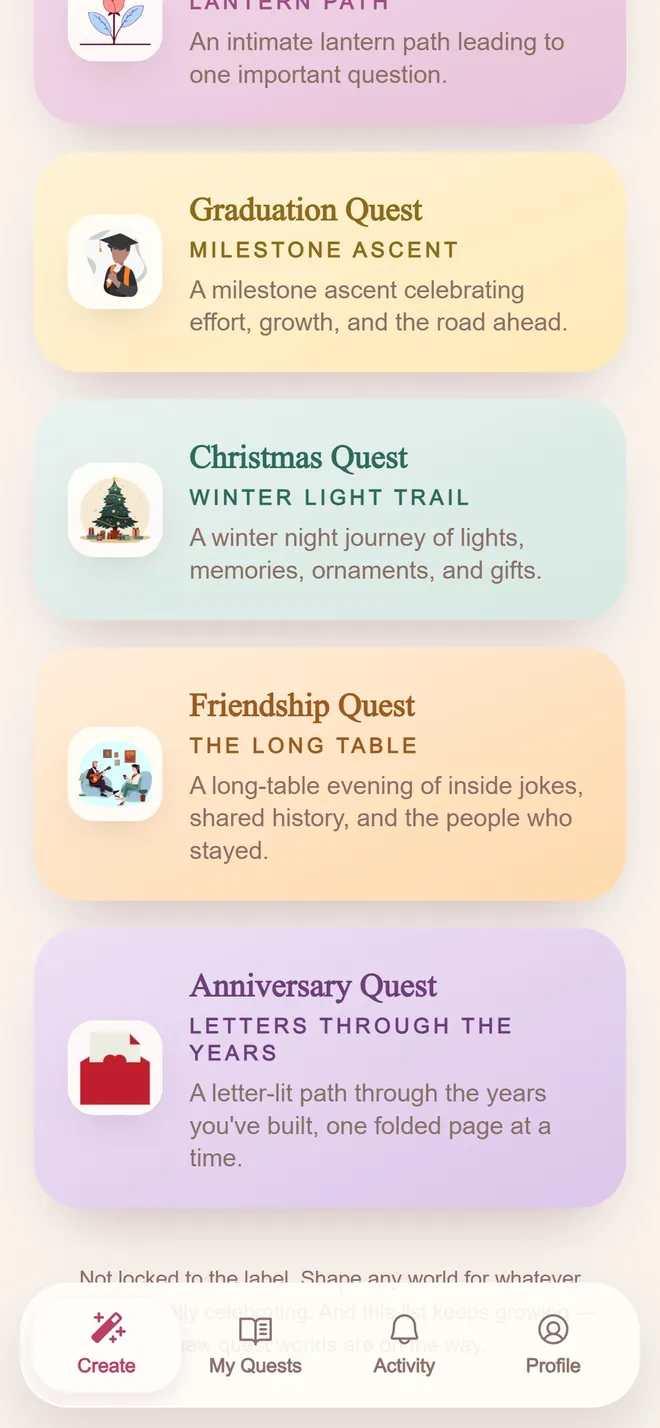

Pick the occasion
step 01 · nine templates
Every occasion, written for your son
The details worth reaching for
Whatever the occasion, these are the specifics that make a message to your son sound like it came from someone who was actually paying attention.
- A time he did the harder right thing
- A way he treats people that you did not teach him
- How he handled something going wrong
- Something he is quietly good at
- A moment you saw him become an adult
- What he does for someone who cannot repay it
- A skill or interest of his you do not share and admire anyway
- The effort behind something that looked easy
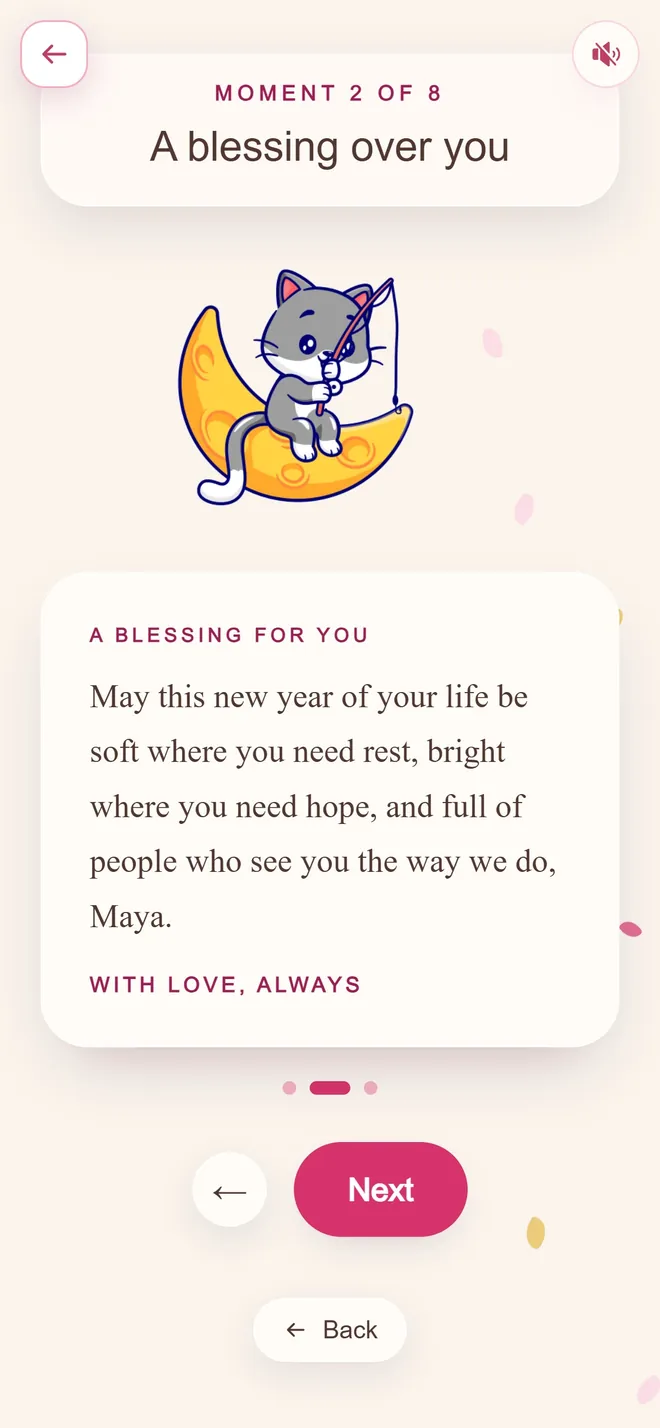
A blessing over you
moment 2 of 8
What goes wrong when people write to sons
Assuming he already knows
The most common reason a son has never heard it is that everyone assumed it went without saying. Write the plain sentence.
Attaching the pride to performance
"Proud of what you have achieved" makes pride conditional on output. "Proud of who you are" is the version that holds when a year goes badly.
Adding one piece of advice at the end
A closing suggestion undoes the message that came before it. Let the card be uncomplicated approval and save the guidance for another day.
Openings and sign-offs that fit this relationship
Ways to open
- “I want to say this plainly…”
- “I do not think I say this often enough…”
- “I saw how you handled…”
- “Something I have never told you…”
- “You may not know this about yourself…”
Ways to close
- “I am proud of you. Full stop”
- “You did that yourself”
- “Always here, whatever happens”
- “Love you, son”
- “Nothing about that is conditional”
Common questions
- What should you write to your son?
- Sons frequently report that they were not sure their parents were proud of them, while their parents assumed it was obvious. The gap is almost always a gap in saying it plainly, not in feeling it.. The message that lands names one specific thing rather than summarising the relationship.
- What should you avoid writing to your son?
- Assuming he already knows. The most common reason a son has never heard it is that everyone assumed it went without saying. Write the plain sentence.
- How do you make a message to your son sound personal?
- Replace one general phrase with something only you would know - a time he did the harder right thing, for instance. That single substitution is what separates a borrowed message from one that sounds like you.
Make it something your son opens
The same details, turned into a private interactive world. Free to build and preview.