
guide
Halloween scavenger hunt ideas for kids, adults, and parties
A Halloween scavenger hunt is a short, themed search where players follow clues or a checklist to find seasonal objects, details, or small surprises in a chosen space.
A good Halloween scavenger hunt is easy to explain and short enough to finish before attention wanders. Pick a safe area, use clues that match the players' ages, and end with one shared surprise or a small treat.
Updated
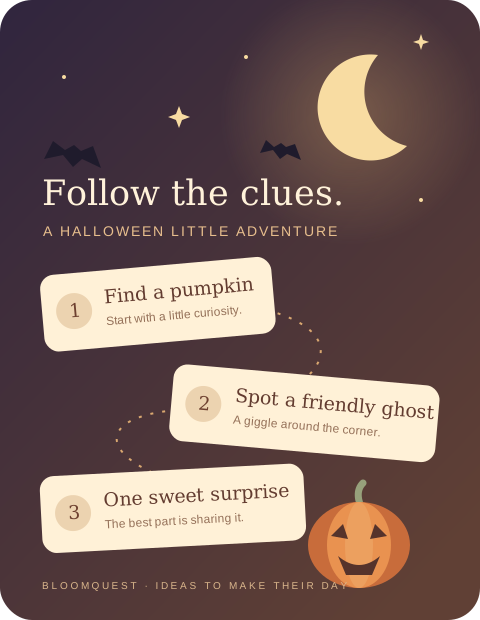
A little Halloween mystery
a clue, a giggle, a shared surprise
Decide what kind of Halloween hunt you are planning
A Halloween scavenger hunt can be a quick living-room activity, a party game, or a guided search through a decorated home. Choose one setting before writing clues. The setting determines what players can see, how far they move, and whether the hunt works best as a checklist or a sequence.
For a small group, sequential clues create a sense of progress. At a busy party, a shared checklist is easier because people can join at different times. A family gathering can use a short memory trail, with each stop pointing to a costume photo, a favorite decoration, or a story someone remembers.
Match the clues to the ages in the room
Preschoolers usually need one-step directions and visible objects: find the orange pumpkin or point to the friendly ghost. Early readers can follow short rhymes or matching pictures. Older children can solve a simple riddle, compare symbols, or collect letters that spell a final word.
Adults can play too. Use inside jokes, details from past costumes, seasonal trivia, or small objects that connect to a shared memory. If children and adults play together, put them in mixed-age pairs or make one group checklist so reading speed and mobility do not decide who wins.
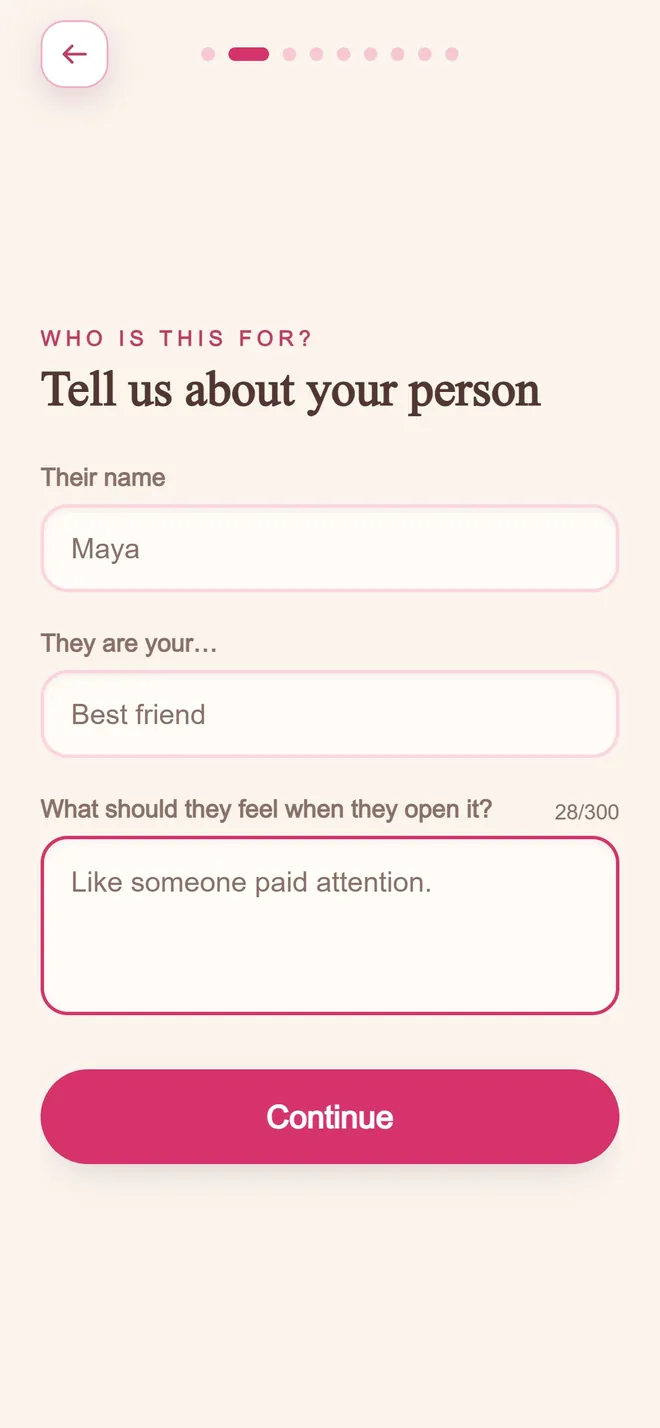

Tell us about your person
step 01 · who it is for
Build a route that feels complete
Start with an easy clue, vary the task once or twice, and finish somewhere everyone can gather. A hunt does not need a complicated plot. The small pleasure is noticing something, solving what comes next, and moving through the space together.
Before players arrive, put the clues in the order they will find them and keep a copy of the route for the host. If a clue gets moved or a player gets stuck, you can give a hint without restarting the whole activity. Put the final treat or activity in place before the first clue is handed out.
Keep the hunt safe and welcoming
Set boundaries out loud: which rooms are part of the game, whether anyone may go outdoors, and what objects must stay where they are. Use paper decorations or battery lights instead of clues near open flames, and do not place hints on roads, stairs, high shelves, or behind heavy objects.
Make participation flexible. A player can read clues, keep the checklist, spot colors from a chair, or work with a partner. If treats are involved, check dietary needs and give everyone a way to take part in the ending. Halloween atmosphere does not require startling anyone or turning the lights completely off.
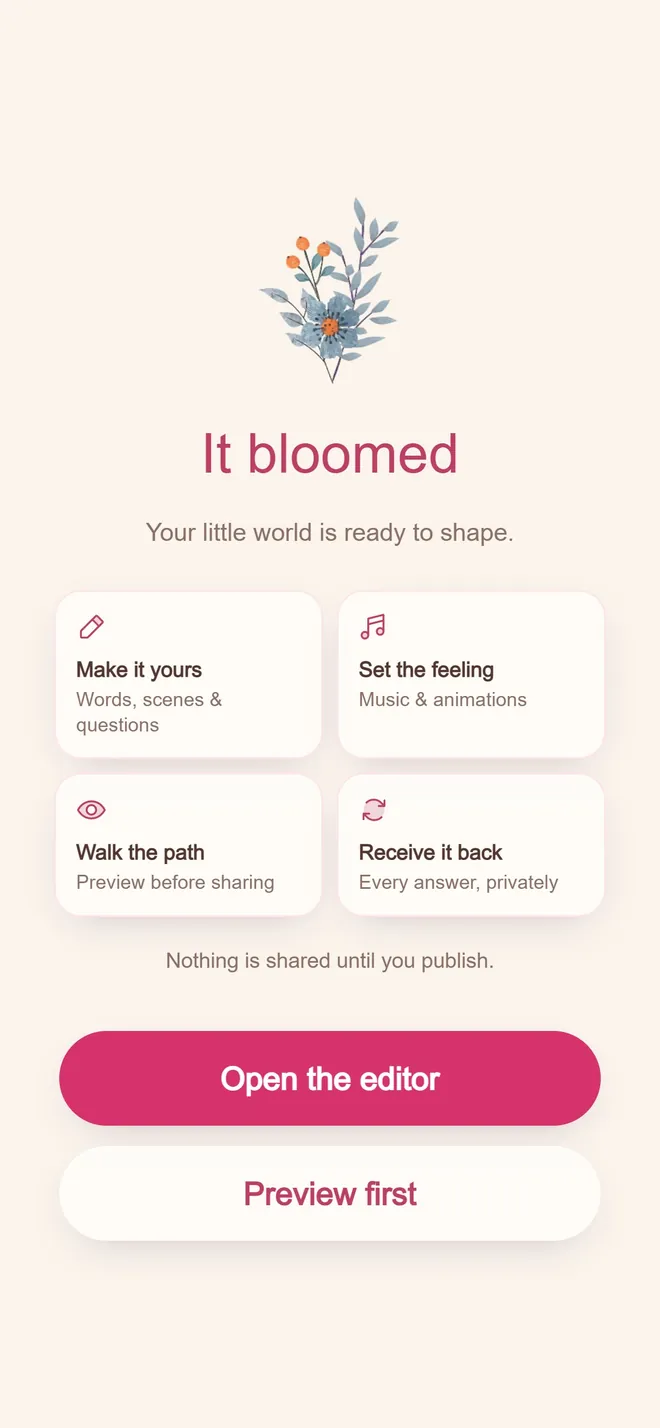
It bloomed
step 03 · under a minute
Give the ending a little meaning
The final stop can be simple: a shared bowl of treats, a craft table, a group photo, or a note naming the best part of the evening. For close friends or family, clues can lead through familiar memories and finish with a small personal message rather than a competitive prize.
For a digital memory gift rather than an in-person party game, see the related digital scavenger hunt gift idea below. A Halloween hunt can also stay entirely offline; choose the format that fits the people who will play.
Halloween scavenger hunt ideas to try
- 1
Find the Halloween colors
Ask players to find something orange, black, purple, and green in the decorated area. For younger children, show color cards instead of written clues.
- 2
Spot the costume details
Make a checklist of visible details: a cape, a striped sock, a paper crown, or a friendly monster. Keep it kind and never make a player's costume the punchline.
- 3
Look for the pumpkin faces
Hide or display paper pumpkins with different expressions. Players find each one and match it to a simple emotion or silly sound.
- 4
Follow a memory trail
For a family or close-friends gathering, let each clue point to a shared Halloween memory, photograph, or old costume before the final reveal.
- 5
Make it a team checklist
Give a mixed-age group one list to complete together: spot a friendly ghost decoration, hear a spooky sound effect, and find a star-shaped object.
- 6
Try a flashlight search
In a familiar indoor space, use battery-powered lights to find reflective paper shapes placed at eye level. Keep normal room lighting on if anyone needs it.
How to set up a Halloween scavenger hunt
- 1
Pick the area and the players
Choose one room, a home, or a supervised party area. Decide whether people will play alone, in pairs, or as one group.
- 2
Choose a simple finish
Decide what everyone is looking for: a basket of treats, a group activity, a photo spot, or a final note. Make sure the ending is available to all players.
- 3
Write five to eight clues
Use objects and decorations everyone can see. Make the first clue easy so players understand the pattern before the harder clues.
- 4
Place clues in order
Keep each clue in a reachable, permitted spot. Avoid stairs, roads, candles, locked spaces, and places that require climbing or moving heavy objects.
- 5
Walk the route once
Check that every clue leads somewhere clear, the wording makes sense for the youngest player, and the finale is ready before the hunt starts.
A short sample clue route
Find something orange that is smiling at you. Your next clue is waiting nearby.
A color and a visible feature make the first step easy to understand.
You found the pumpkin. Now look for a paper bat resting somewhere you can reach without climbing.
The clue names the next object and sets a safe boundary.
The last surprise is where everyone can sit together. Bring your bat and pumpkin to the snack table.
A group finale gives the hunt a natural stopping point.
Mistakes worth avoiding
Writing clues that are too difficult
A hunt should create momentum, not test reading level. Use a picture, color, or two-part hint when players are young.
Making the play area too large
Players lose the thread when clues send them across a building or outside without clear supervision. Keep the route contained and visible.
Leaving out an accessible way to play
Do not make every clue depend on running, reaching high shelves, or recognizing small print. Offer a teammate, picture list, or seated role.
Making the prize the only fun part
The search itself should be enjoyable. Use funny decorations, teamwork, and a satisfying final stop so the activity still works without a large prize.
Common questions
How many clues should a Halloween scavenger hunt have?
Five to eight clues are enough for a short home or party hunt. Use fewer for very young children and add clues only if the group can stay engaged.
What are easy Halloween scavenger hunt clues for kids?
Use one-step prompts based on colors, shapes, and visible decorations, such as finding an orange pumpkin or a paper bat. Picture clues work well for children who are not reading yet.
How do you run an indoor Halloween scavenger hunt?
Choose a few rooms, set clear boundaries, place clues in reachable spots, and walk the route once before players begin. Keep the finale ready and avoid stairs, candles, and locked areas.
Can adults enjoy a Halloween scavenger hunt too?
Yes. Use inside jokes, past costume photos, seasonal trivia, or clues tied to a shared memory. A mixed-age group can play in pairs or complete one checklist together.
Build a personalized quest
Free to start. Pay only when you are ready to share.