
guide
Gifts for someone who has everything (and does not want more clutter)
When objects run out, attention becomes the gift. People who have everything usually lack evidence that you notice the specifics of who they are.
Updated
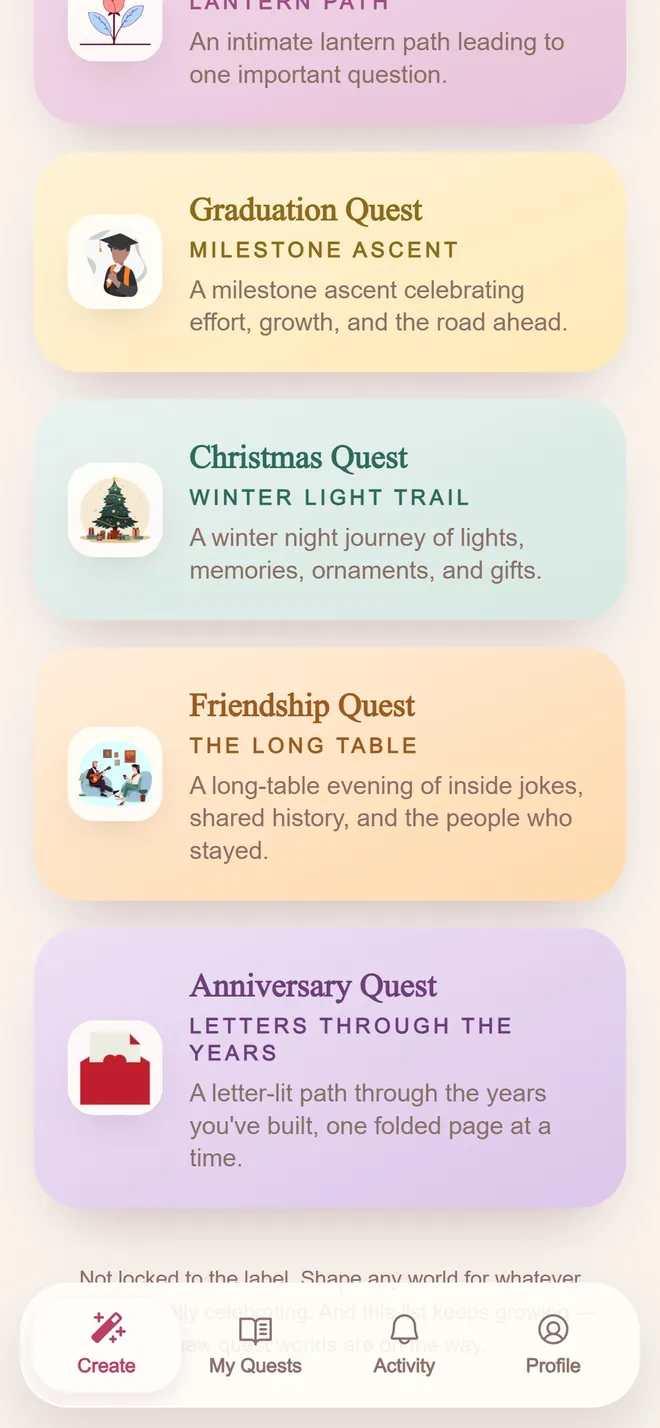

Pick the occasion
step 01 · nine templates
Trade ownership for meaning
Ask what cannot be bought: a witness statement of their character, a timeline of what you have survived together, a private experience only they open.
BloomQuest: Celebrate turns that brief into an interactive quest rather than another shelf item.
Physical gifts that still make sense
Consumables they already love, experiences you attend together, or a tiny object paired with a large personal note. The personal piece does the heavy lifting.
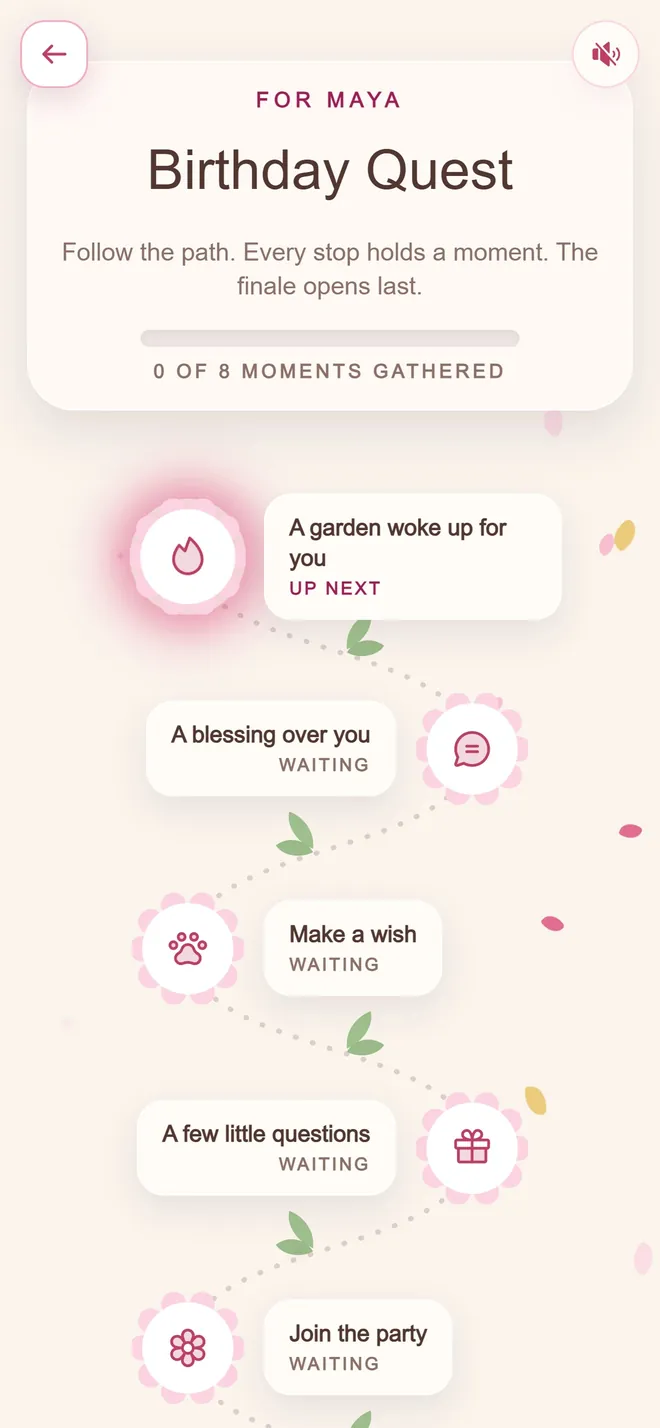
Every stop holds a moment
the path they walk
Occasions this shows up most
Birthdays, Christmas, Mother's Day, Father's Day, and anniversaries. Match the template to the day, keep the strategy the same: specificity over spend.
For recipients who are also difficult to surprise
Some people who have everything are also very hard to surprise, since they tend to notice planning in advance. A memory based or witness-based gift sidesteps this entirely: there is no object to spot in a bag or a browser history, because the content lives entirely in your head until the moment you deliver it.
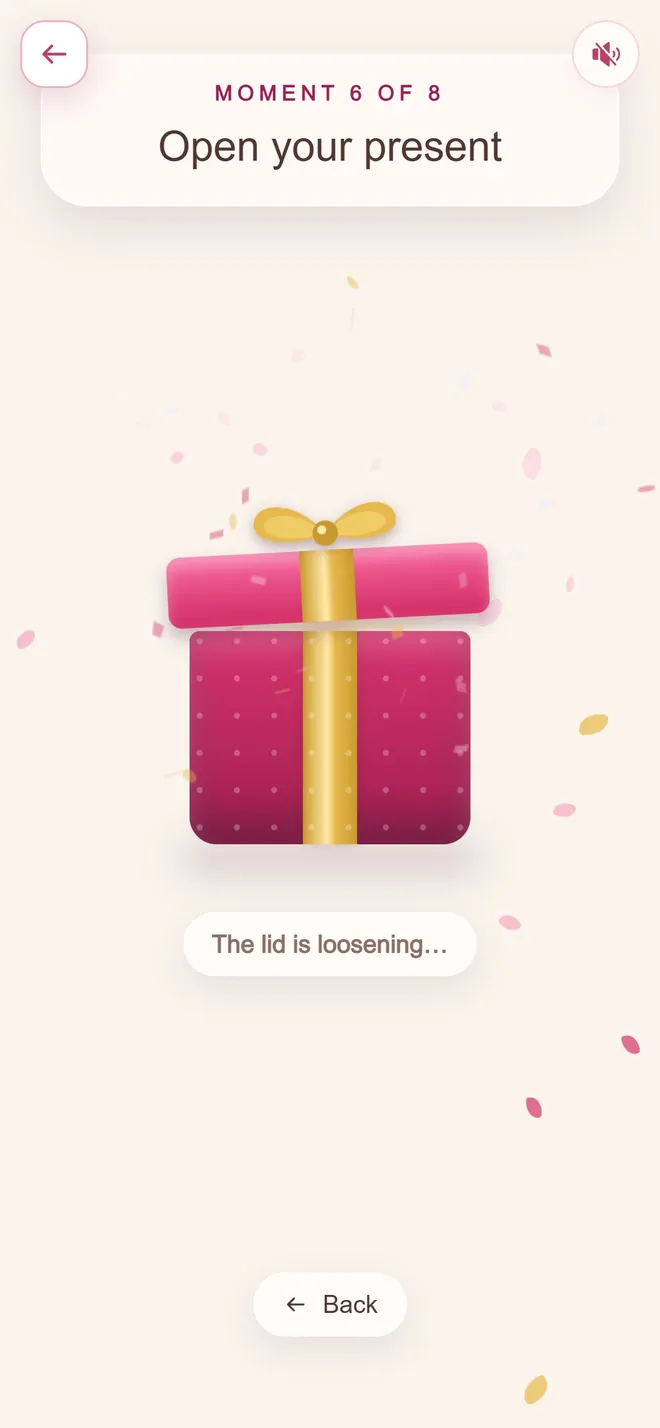
Open your present
moment 6 of 8 · unwrap it
When they explicitly ask for nothing
"I don't need anything" is usually a statement about objects, not about attention. A gift built from witness and specific memory tends to satisfy this request literally it adds nothing to their home while still marking the occasion meaningfully.
The ideas, in order
- 1
A memory based interactive quest
Nothing to store, nothing to return: a private path built entirely from shared history.
- 2
A witnessed traits letter
Tell them something specific you have noticed about them that they did not know you had clocked.
- 3
A planned shared experience
Time together, scheduled and specific, rather than another object competing for shelf space.
- 4
A skills or class gift, personalized
Choose based on something they have mentioned wanting to learn, not a generic voucher.
- 5
A digital keepsake they can reopen
A gift that persists without occupying physical space, revisitable whenever they want.
- 6
A multi voice tribute
Short contributions from several people who know them, combined into one gift, cannot be replicated by any purchase.
Examples you can borrow
I thought about buying you something for approximately four seconds before remembering that you already own anything you would actually want. So instead, here is what I would tell someone about you if they asked.
Naming the shopping difficulty upfront frames a personal gift as the deliberate solution rather than a fallback.
You are the only person I know who reads the instructions before assembling anything, and somehow still finishes before everyone else who didn't.
Small, specific, slightly funny observations are unpurchasable in a way no object can match.
Mistakes worth avoiding
Defaulting to more expensive instead of more specific
For someone with everything, spend does not solve the problem. Attention does.
Choosing another physical object anyway
Adding clutter to solve a clutter problem rarely works, even when the object itself is nice.
Making it generic because you are stuck
Difficulty choosing is exactly the signal to lean into personal specifics rather than retreat to safe defaults.
Assuming higher price signals more effort
For this recipient specifically, spend and thoughtfulness are frequently unrelated, and they usually know the difference.
Related ideas
Common questions
What do you get someone who has everything?
Proof that you see them: a personalized interactive quest, a sincere letter, or time together. Avoid random luxury objects that add clutter without meaning.
Is a digital gift too cheap for a wealthy person?
Not if the content is rare. Wealthy people receive objects constantly; they receive specific emotional attention less often.
What if they say they genuinely want nothing?
Take it as a request to skip objects specifically, not attention. A memory based or witness-based gift satisfies the literal request while still marking the occasion.
Is it appropriate to combine a small physical gift with a personal one for this recipient?
Yes, as long as the physical piece is small and consumable or purposeful rather than another object to store. The personal content should still carry most of the weight.
Build a personalized quest
Free to start. Pay only when you are ready to share.