
Sympathy
What to write in a sympathy card for your coworker
For a sympathy card to your coworker, write two or three sentences and include a specific thing they are the reliable person for. Keep the greeting simple, say why that detail matters, and close in your natural voice. Below are 4 examples you can copy directly or personalize.
Updated
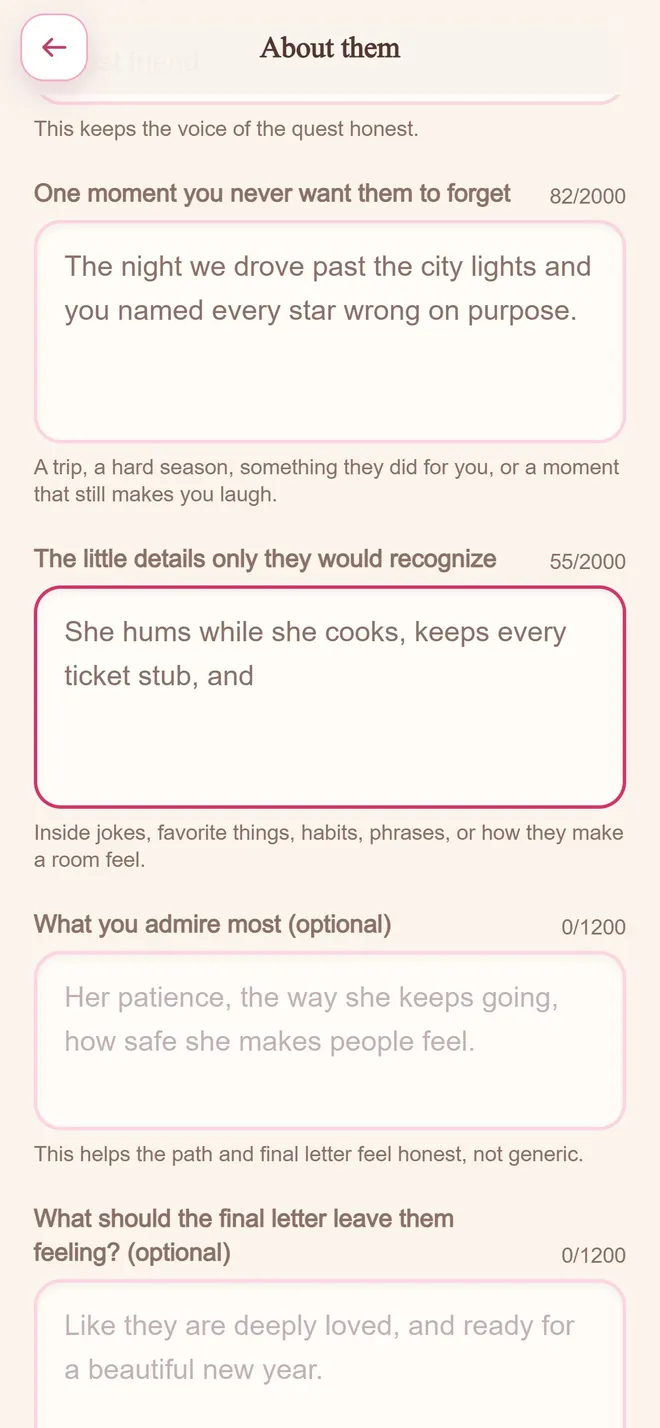

The memories only you know
step 02 · the brief
A card is a constrained format: a fixed amount of space, read once in front of other people and then possibly kept for years. That constraint is what makes it hard.
A colleague's bereavement arrives in a professional context where the main thing you can usefully remove is the work.
A colleague message has a constraint the others do not: it will probably be read in front of other people, and it has to survive being read by someone it was not written for.
A sympathy message cannot help, and trying to help is what makes most of them worse. Silver linings, reassurance about a better place, and instructions to be strong all ask the bereaved to manage the writer's discomfort.
4 sympathy messages for your coworker
- Card
I was very sorry to hear about your father. Thinking of you.
- Card
There is nothing useful I can say. I am sorry, and I am here.
- Card
Everything of yours is covered for as long as it takes. Please do not think about work.
- Card
So sorry for your loss. No reply needed to this.
What actually works in a sympathy message to your coworker
The most common failure is spending the opening line on the occasion itself, which everyone can already see printed on the front of the card.
Silver linings, better places and instructions to be strong all ask the bereaved to manage your discomfort.
Most colleague cards say nothing that could not be said to any colleague. Naming one true professional detail is the entire difference.
Use the person's name. Bereaved people report that others avoid it, and that the avoidance makes the loss lonelier.
Timing and etiquette for a sympathy message to your coworker
Later is often better. The messages stop after two weeks and the loss does not.

It bloomed
step 03 · under a minute
Details only you would know about your coworker
A specific thing they are the reliable person for is usually the fastest way in. Swap one general phrase in any message above for one of these and the borrowed line becomes yours - your coworker will recognize it immediately, which is the entire point.
- A specific thing they are the reliable person for
- How they behaved during a genuinely bad week at work
- A habit that quietly makes everyone else's job easier
- Something they taught you without being asked
- How they treat people more junior than them
- The meeting or project where they were noticeably good
- A standard they hold that others have started copying
- The thing they do that nobody has ever thanked them for
What goes wrong when people write to coworkers
Writing something that fits anyone in the building
"Great to work with" is a placeholder. One concrete professional observation makes the card worth keeping.
Crossing into personal territory
Comments on appearance, home life or relationship status read differently in a workplace card, especially one passed around an office.
Making it about your working relationship only
If the card is entirely about how they help you, it becomes a note about your own convenience. Name something true about them independent of you.
Common questions
- What is the best sympathy message for your coworker?
- Pick one real detail - a specific thing they are the reliable person for - and build two or three sentences around it. A colleague message has a constraint the others do not: it will probably be read in front of other people, and it has to survive being read by someone it was not written for, which is why a message that could only have been written to your coworker outperforms a longer, more polished one that could go to anyone.
- What should you not write to your coworker?
- Avoid writing something that fits anyone in the building. "Great to work with" is a placeholder. One concrete professional observation makes the card worth keeping.
- How long should a sympathy message be?
- Short. Name the person, offer one memory if you have one, make one concrete offer, and stop. Do not fill the card.
- How do you make a sympathy message sound personal rather than copied?
- Change one detail to something only you would know. Take any message here and replace its general noun with how they behaved during a genuinely bad week at work. That single substitution is what separates a message that sounds borrowed from one that sounds like you wrote it.
When a sympathy message is not quite enough for your coworker
Start with the detail, not the greeting. The greeting is already done for you.
BloomQuest takes the same raw material this page has been asking you for - a specific thing they are the reliable person for, the thing you would never say out loud - and turns it into a small private world your coworker opens from one link. Your words, their memories, and a finale you write yourself.
Making it explicit that nothing is expected of them is the most useful sentence available.
Free to build and preview. Browse the occasion worlds.
Other messages for your coworker
More sympathy messages
When a sympathy message is not quite enough for your coworker
Start with the detail, not the greeting. The greeting is already done for you.